
Learning how to pitch a curve ball is one of the most exciting steps in a pitcher’s development. It’s also one of the trickiest. When thrown correctly, a curve ball drops sharply before reaching the plate, keeping hitters guessing and giving pitchers a real edge. But mastering this pitch takes proper instruction and patience.
At Baseball Clubhouse Utah, young athletes learn how to throw a curve ball safely and effectively. Focusing on mechanics, control, and confidence rather than just speed or spin.
Understanding How a Curve Ball Works
To understand how to pitch a curve ball, it helps to know what makes it move. A fastball travels straight with backspin. A curve ball on the other hand, creates topspin which is a forward rotation that causes the ball to “break” downward”
The sharp drop isn’t a result of twisting the arm or snapping the wrist. It comes from consistent mechanics, body control, and the right release. When done correctly, the pitcher’s delivery looks nearly identical to a fastball until the last instant, making the pitch incredibly deceptive.
Finding the Right Curve Ball Grip
The curve ball grip is what sets the pitch apart. Most pitchers place their middle finger along the bottom seam and their thumb directly underneath for balance. The index finger either rests next to the middle finger or points along the side of the ball. Photo below for reference:
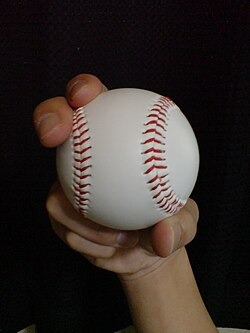
When throwing, the pitcher pulls down on the front of the ball with that middle finger, finishing with a smooth follow through. The motion is more about technique than force. Imagine “pulling down a window shade,” not snapping or twisting the wrist.
Common Mistakes When Throwing a Curve Ball
Even small errors can turn a curve ball into a flat, hittable pitch, or even worse – lead to arm strain. Some of the most common mistakes include:
- Over rotating the wrist: This can strain the elbow and reduce control.
- Slowing down the arm: A slower motion makes the pitch easier to recognize.
- Dropping the elbow: This changes the release point and flattens the “break.”
- Throwing too many curve balls: Overuse can cause fatigue or injury, especially in young arms.
Learning to throw a curve ball safely means focusing on mechanics and moderation, not just movement and grip.
When is the Right Time to Learn the Curve Ball?
Young players are often eager to learn how to pitch a curve ball, but timing matters. Before adding breaking pitches, pitchers should have a strong foundation in fastball control and overall mechanics.
Most coaches recommend introducing the curve in the early teen years, once the player’s arm strength, coordination, and delivery are well developed. At The Baseball Clubhouse Utah, instructors ensure each athlete learns the pitch at the right time and in the right way – protecting their arm while helping them improve.
Why Professional Pitching Lessons Help
Pitching lessons at The Baseball Clubhouse Utah are designed to help players understand both the “how” and the “why” behind each pitch. Coaches use video breakdowns, one-on-one instruction, and targeted drills to fine-tune delivery and spin.
Players don’t just learn how to pitch a curve ball – they learn when to use it, how to mix it with fastballs and changeups, and how to keep hitters off balance. This complete approach builds confidence and consistency, two key traits for success on the mound.
Build Confidence and Command the Mound
Throwing a great curve ball can make a pitcher stand out. With the right grip, timing, and guidance, young players can master the movement while keeping their arms healthy.
If your athlete is ready to learn how to pitch a curve ball the right way, The Baseball Clubhouse Utah offers expert instruction and a professional training environment designed to bring out every player’s potential.
Schedule a pitching lesson today to help develop the confidence, mechanics, and control to command the mound.